Organization support
One place to see and manage an organization’s schedules and users.
An organization gives a larger team one place to see and manage its schedules and users. Members can view schedules in the organization even when they are not on that schedule.
Organization basics
An organization comes from the identity provider you sign in with. When that login includes organization details, your account is linked to the matching organization in On-Call Optimizer.
The supported organizational identity providers are:
- Google Workspace
- Microsoft Work accounts with an associated organization.
Organization features don’t work with a personal Gmail or Outlook account.
If your account belongs to an organization, the organization’s name appears with a building icon in the top navigation bar, next to the On-Call Optimizer logo. If you don’t see it, your account isn’t associated with an organization.

Small screens
Organization page
Click the organization name in the top navigation bar to open the organization page. It has these tabs:
- General: the organization’s name, domain and authentication provider.
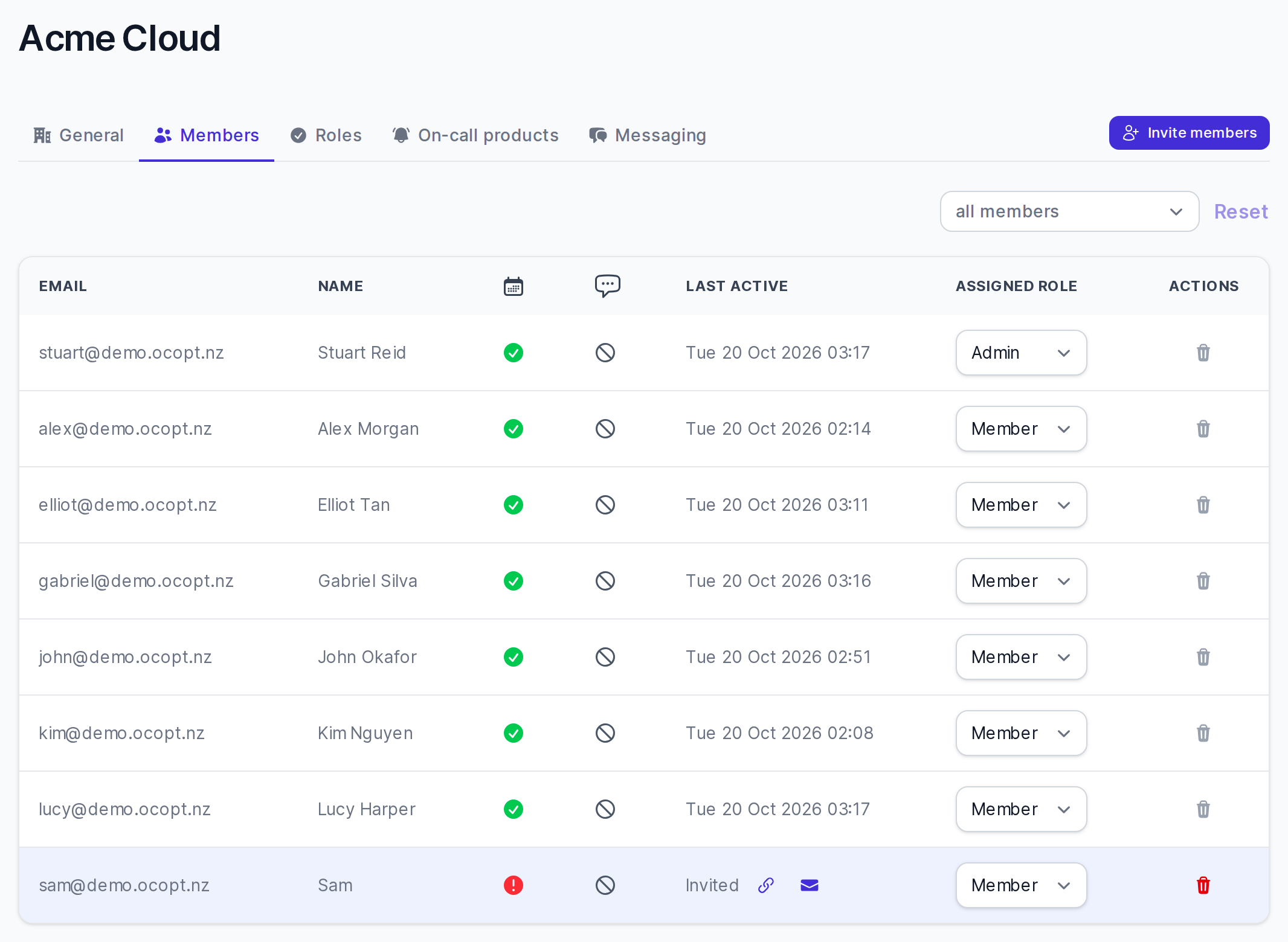
- Members: everyone in the organization, with icons for their calendar and Slack status (hover over an icon to see what it means), when they were Last active, and their Assigned role. Pending invitations are listed here too, with actions to copy the invitation link, resend it or delete it.
- Roles: the permissions granted to each organization role.
- On-call products: the organization’s on-call product connections.
- Messaging: the organization’s messaging integrations, such as Slack.
Use Invite members on the organization page to invite people to join the organization. On the Members tab, you can filter the list to show members with incomplete onboarding or pending invitations.
Organization resource ownership
Most resources created by an account in an organization belong to the organization, not the person. That includes schedules, on-call products and messaging integrations.
Calendar integrations are the exception. They always belong to the person who connected them.
Organization best practices
Multiple administrators
Give at least two people the Organization Admin role, so the organization doesn’t depend on one person.
To change the role of a member of your organization:
- Click the organization name in the top navigation bar.
- Open the Members tab and find the member in the table.
- Choose Admin in the member’s Assigned role select.
Only organization admins can change roles. If you are the only admin, your own role is shown as text, not a select, so the organization always has an admin.
Organization roles
Each member has a role, and the role decides what they can do. The roles are:
Organization admin
- Can participate in the schedules they have been added to according to their assigned schedule role.
- Can change the organization role of any member of the organization, and the permissions of the member role.
- Can view, change and delete every schedule in the organization.
- Are automatically granted all of the organizational permissions available to members described below.
The first person to sign in from an organization becomes its admin. Later users are members.
Organization member
Organization members can participate in the schedules they have been added to according to their assigned schedule role.
The organization member role can also be granted any of the following permissions, on the organization page’s Roles tab. Only organization admins can change them.
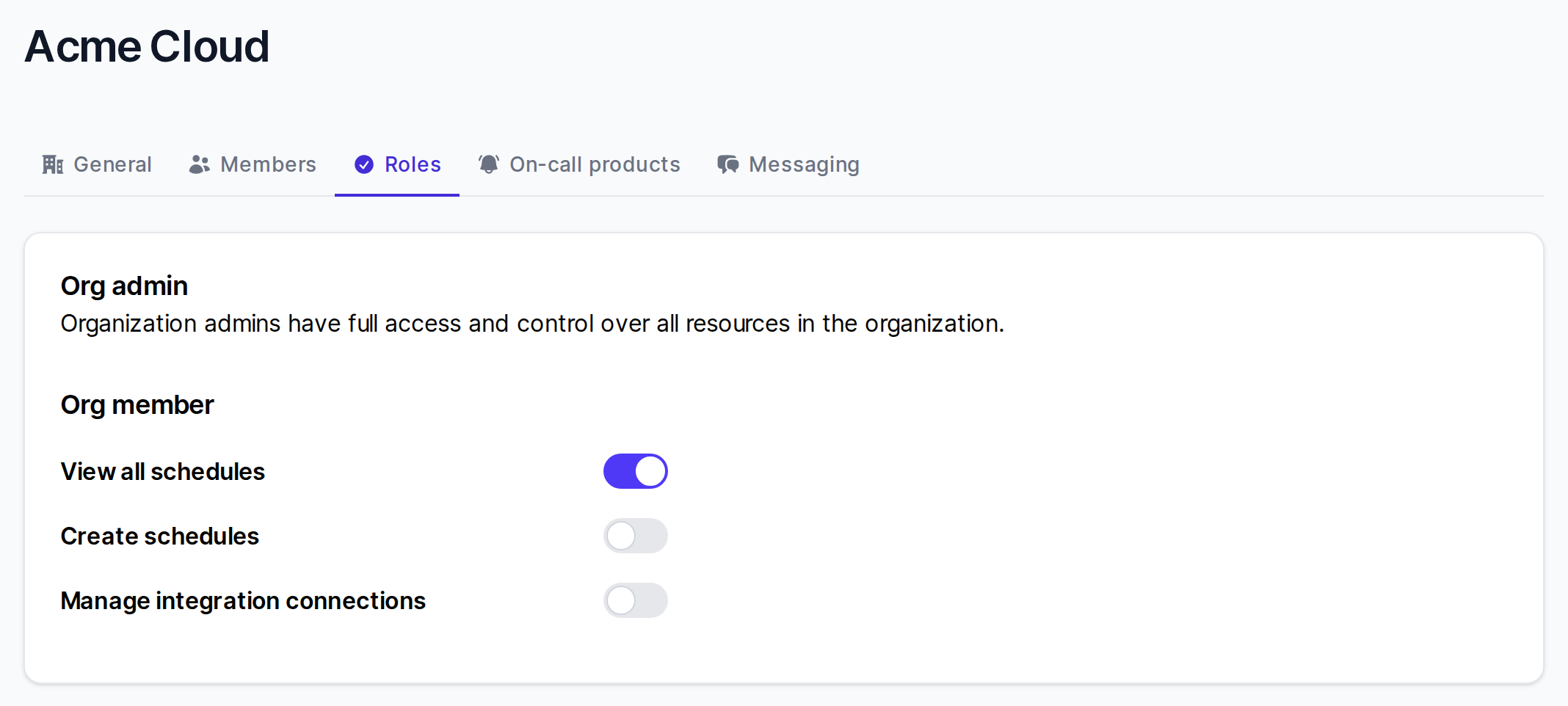
- View all schedules: on by default. Members can view schedules in the organization that they are not members of.
- Create schedules: off by default. Members can create new schedules. (Without it, only organization admins can create schedules.)
- Manage integration connections: off by default. Members can create, update and delete integration connections, such as on-call products and messaging.
Deleting a schedule always requires the schedule admin role on that schedule, or the organization admin role.